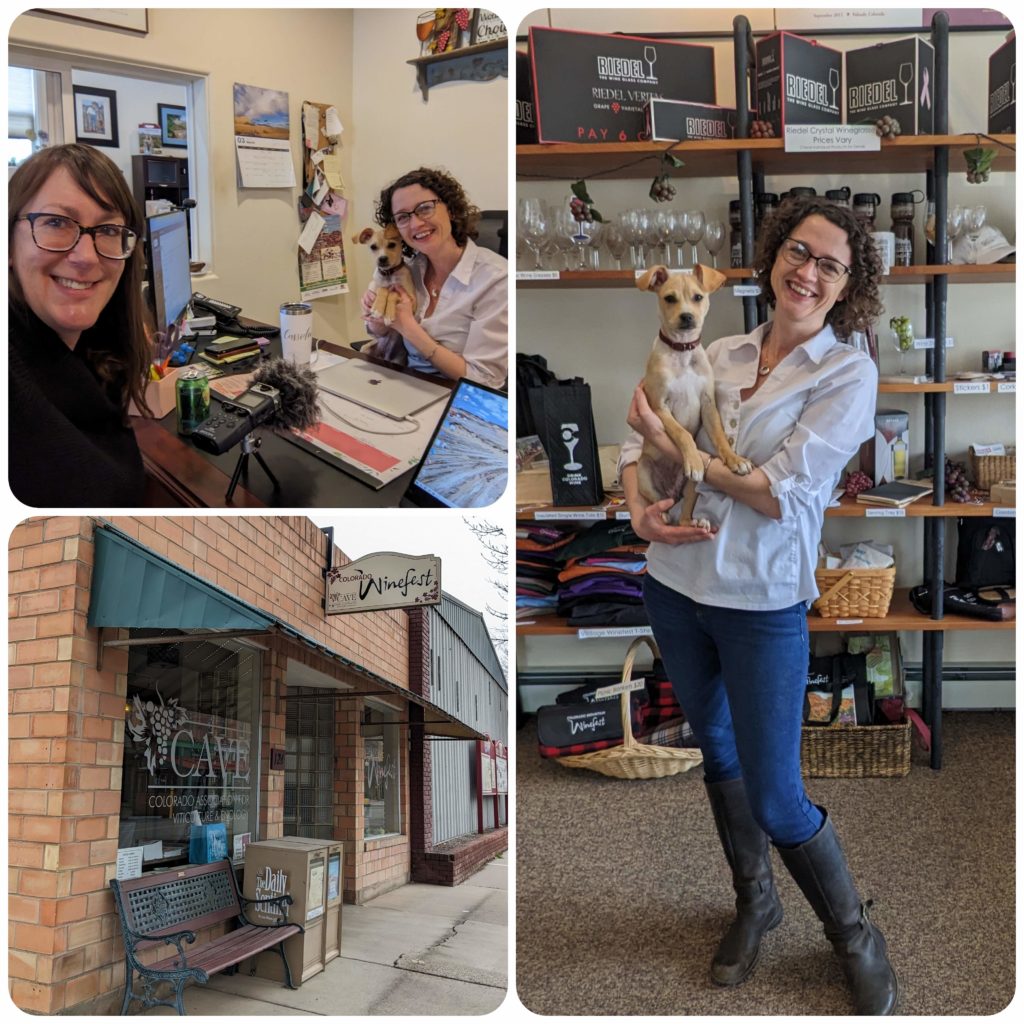
E3: Colorado Association for Viticulture and Enology (CAVE) – Cassidee Shull

Today I’m talking with a star of the Colorado wine scene, Cassidee Shull. Cassidee is the Executive Director of the Colorado Association for Viticulture and Enology, aka CAVE. We chat about the Colorado wine industry, the events CAVE has planned for the year, how Cassidee got her start in the industry, and what her favorite things are about Palisade. We also have a very special guest in-house…Jilly the puppy!

For more info about CAVE or the Colorado Mountain Winefest and other events, check out their websites: winecolorado.org and coloradowinefest.com.

Music by Romarecord1973 from Pixabay.
Subscribe:

SpotifyAnchorApple PodcastsCastBoxPocketCastsPandoraAmazon MusiciHeartRadioYouTube


Transcript:

Hello and welcome to Postcards from Palisade, the podcast that’s all about the people and places that make this slice of western Colorado wonderful. I’m your host, Lisa McNamara.

Today I’m talking with a star of the Colorado wine scene – and her new sidekick – to find out what’s going on in Palisade and the wider Colorado area in the wine industry today.

Thanks so much for spending some time with me today.

Cassidee Shull (CS): I’m Cassidee Shull, I’m the Executive Director of the Colorado Association for Viticulture and Enology. We produce Colorado Mountain Winefest and a VinCO conference over here in Palisade and Grand Junction.

Lisa McNamara (LM): And if we hear anything in the background, any chewing, who is that?

CS: We are here in my office in Palisade with our little puppy, Jilly, and she’s enjoying a little bone behind us.

LM: So for somebody who maybe hasn’t heard the terms viticulture and enology before, what does that mean?

CS: Our organization has a very long name; we’re more affectionately know as CAVE, but viticulture is grape growing and enology is winemaking. We are a 501(c)(6) trade non-profit. We were established way back in 1987 as an all-volunteer board over here in Palisade by winemakers and grape growers here in the area, and we are set up like a chamber of commerce. We have several membership tiers, winery and vineyards, allied trade partners, other organizations that are interested in being part of the organization, maybe retailers, real estate offices, things like that. Cork companies. And then individual members, so amateur winemakers and the like.

And so our whole organization exists to support winemaking and grape growing throughout the state, through education and research. And we do that through a couple really big events. Mostly the consumer-focused event folks are more familiar with is Colorado Mountain Winefest, and then all the proceeds of that go back to the industry through our trade conference held every January called VinCO.

LM: And what would a member of CAVE get? Like, what benefits do they get by joining?

CS: Several benefits through all three of those tiers, but the big ones are discounts to a lot of those events. We put on many educational seminars throughout the year. We hire a full-time lobbyist that monitors and legislates on behalf of the industry, and monitors alcohol-related bills for us.

Like I mentioned that conference we put on – it’s a four day multi-track trade show and conference held over here in Grand Junction. We partner with the Western Colorado Horticultural Society and put together four days of industry learning, and we bring in folks from all over the country and sometimes all over the world to speak to our industry on winemaking, grape growing, business and marketing, and a very large trade show accompanied with that. And then we do a lot of marketing and outreach on behalf of the industry, through Winefest of course, that event brings in anywhere from 4,000 to 5,000 attendees for several days in September.

So, a lot of different things! We also run an amateur wine competition throughout the year for our amateurs, bringing in judges from across the state to judge amateur wine. So, a lot of different facets.

LM: With the amateur winemaking, I looked at that a little bit online, and there were a lot of different award winners, so that made me think – there must be a lot of entries!

CS: Yes! We range anywhere from I’d say, 80 to 90 to over 120, depending on the year. And then, what’s really, really cool about that event, is we get to see amateurs enter year over year and maybe get a bronze, a silver, a gold medal, then gold, double gold, year over year, and then really get those comments and feedback from our judges. And then get that praise, and just really want to step up their game, and then go on to open a commercially licensed winery in the state. So, just really seeing that stepping stone and being part of growing the industry itself.

LM: Jilly is jumping on me right now. She’s so cute! She’s so small! She’s so tiny!

CS: She just really wants to be part of the interview!

LM: So that’s cool, you get to see them grow and progress over time and really get to know people as they get started. That’s really cool.

CS: Yeah, we’ve been part of – or not been part of, but just gotten to see the industry grow. One of the CAVE board members, Juliann Adams with Vines 79, actually was one of our amateur winemakers for many years and opened her winery during covid.

LM: Oh wow!

CS: And she’s located right here in Palisade.

LM: Well I did have one follow-up question about VinCO – the average person maybe wouldn’t necessary know it’s going on, but it just seems like such a great venue and important resource for winemakers and grape growers in Colorado. What do you see being kind of – the few things that are most in demand for people wanting to learn about?

CS: So you’re exactly right, VinCO is a very industry-focused event. A lot of folks don’t really even – if you were a consumer on the street, don’t really know it’s happening in the convention center, especially in the middle of January, but we’re seeing a lot of folks in the industry really focused on water right now. We’re obviously in a drought…years…in the western slope, and in Colorado in general.

And then in winemaking and viticulture in general, we’re really focused on the types of grapes we’re growing. 2020 was a really devastating year for everybody, of course with the pandemic, but in the wine industry, we suffered a very, very devastating freeze out here in Palisade and even up into the West Elks area. It was late October, we had an over 70 degree shift in temperature in 24 hours, and lost – I think the final count was I think 70-80% of all vinifera.

So we’re really looking at hybrids and different types of grapes that grow well in Colorado. As you know, our climate is very temperamental! We could have very late spring frosts, or very early frosts in the fall, so we’re doing a lot of research and winemaking techniques with different types of hybrids that consumers maybe may not be as familiar with. So you’ll see a lot of those sessions at previous conferences. We have all of those available on our website and then looking forward to what will be available in our 2024 conference as well.

LM: And then, y’all also do another event, the Barrel into Spring, right?

CS: Yes, that’s a newer one! This will be our second year we’ve offered that event. That was a long-standing event put on by a previous wine association here in the Grand Valley that we’ve taken over. It’ll happen in one weekend in April and one weekend in May and feature tastings from seven separate wineries – seven wineries in April and seven wineries in May and then – barrel samples and then food bites at each of those locations as well.

LM: Barrel samples – I think it’s such a unique thing. It’s not something that somebody can get every day, right?

CS: Yes.

LM: Like this is kind of your one chance to do it.

CS: Absolutely. So it’s a definite heightened experience than what you would see just behind a tasting bar. And really, I like to think of it as like, really glimpsing into the future. Because you’re again tasting something that’s not even been released yet, it’s not fully developed yet. And then have the ability to say, like, I really want to purchase part of what’s in that barrel. So you’re kind of just tasting futures almost, which is exciting.

LM: It wasn’t obvious to me at first when I started reading about the event, and then when I started hearing or understanding a little bit more, like – oh, you’re actually tasting something that you can’t get any other time of the year.

CS: Yes!

LM: And it’s seven different wineries each weekend, so it’s really a chance to see like, fourteen different wineries and what their products are going to be like in the future. It’s a really cool event.

CS: Yeah, I absolutely agree, and if folks are really looking for that unique experience – you’re tasting wine that will literally taste different, a week later, even, because it’s still not completely aged and not finalized. We’re all living in that moment of experiential and very unique experiences, and so that’s what I always think of. And I’m like – oh yeah, we’re tasting something that we’ll never have again, because it’s gonna be different when it’s bottled, or even different when it’s sitting in that barrel a month later, two months later.

LM: So, a lot of my questions are really Palisade-focused, but I know that CAVE doesn’t just focus on Palisade, obviously, or even just the Grand Valley AVA. You focus on Colorado as a state, in general.

CS: So we are actually working with the Colorado tourism office on a marketing grant right now, and we’ve highlighted and through a lot of research of where folks are touring and tasting from – and to – three main wine regions. So we have two American Viticultural Areas, the Grand Valley AVA which is here in Palisade and the West Elks AVA which is up in Paonia and Hotchkiss area. We’re highlighting both of those areas. There’s about 30 plus wineries here in Palisade, another 25 or so up in the West Elks region and outlying areas.

And then we are also highlighting the Front Range wine region. And the Front Range wine region, we are very broad in pulling from Boulder and Fort Collins all the way down through the downtown Denver area, and then there’s wineries all the way down to Colorado Springs, Canyon City. And so if you’re out wanting to grab a bit of food or see a ball game and then want to grab a tasting – glass of wine at a tasting room, you’re able to do so literally just about anywhere in Colorado. We have wineries all the way down at the Four Corners region, we have wineries in Evergreen. We have wineries literally on the continental divide! So it’s really a unique state to drink Colorado wine – wine in general obviously, and then where our growing regions are as well.

LM: Over the last ten years or so, how has Colorado wine production changed?

CS: Exponentially! When I started, just over twelve years ago, we had just over a hundred wineries, and about the same vineyard production, but we’re now sitting at over a hundred and seventy wineries.

LM: Oh wow!

CS: And that includes wine, cider, and mead, but it’s really exciting to see how far the industry has come, and the perception of Colorado wine has changed significantly. We have wineries that are being written up in Forbes, and Wine Spectator, and Wine Enthusiast, and our regions are just getting such great press and representation, which is just so exciting to see!

LM: Yeah, it is really exciting. I mean, I’m obviously a big fan of Colorado wine. So we were talking a little bit earlier about the ballot initiatives in 2022. There was a lot that people were able to vote on last year in terms of wine, wine availability, and the one that actually passed was wine in grocery stores. Can you talk a little bit about the one that passed and if CAVE had an official position on any of those initiatives?

CS: Yes, there were a lot of initiatives involving alcohol and wine. Our organization did not take an official position on any of them. I don’t believe! This was a while ago, and we have a lot of legislation coming down right now. The one that did pass was wine in grocery stores. We have such a large representation of our membership that some would benefit from, some would not, and we felt that it was in the best interest to let our membership kind of go forward with what works best for them rather than take a position that may negatively impact one or the other.

From vintners, restaurants, limited wineries – we have liquor stores we represent as well. We have immediately seen – I mean, that went into effect just earlier this month, twenty days ago or so. We have some that are making use of that and have seen placement in Whole Foods and Trader Joe’s, City Markets and things like that. And then some that are just continuing on with direct to consumer or liquor store placements. But it’s definitely a shift overall in the model for sure.

LM: Yeah and I imaging that it would be a very complex issue for this position, where you are really trying to elevate everybody.

CS: Yes! And we are a small industry. As you know in California and some of those bigger wine regions, they’re like, wait, you don’t have this? This is old news! But those are also very large production industries. On average I’d say the Colorado wine industry is about 1,000 to 2,000 cases per year [per producer]. We do have several wineries that make much, much more than that, and then we have some that make less than that. But to fulfill some of those case orders, or some of those orders for some of these larger grocery stores or convenience stores, that’s when you get into some of those, like you said, those layered and complex issues.

LM: That makes sense.

CS: It may work for some, it may not work for all.

LM: Right. If you need to take her out or anything, we can totally pause too! They need to go out a lot, right?

CS: I think I’m gonna give her – I have a little toy for her.

LM: Oh, oh yeah!

CS: I’ll put it out here so she’s not…

LM: She’s like, distracting me with her cuteness! I’m like aww, aww! Anyway, but for the upcoming year you mentioned that there were quite a few things currently in legislative session relating to the alcohol industry. What kind of things are you seeing?

CS: Yeah, there are lots of things happening in the legislative world regarding alcohol. Currently our organization is working on a festival bill to assist with the amount of festivals a winery – or cidery, brewery, distillery – can attend in a twelve month period. So that would really assist with the wineries’ ability to attend festivals, sell wine by the glass or bottle, and just be able to have that be an additional extension to their business model.

LM: So there’s a limit today, then?

CS: Mmhmm.

LM: Oh, interesting, so they’re capped, so really, a winery would need to say, OK, I need to pick…

CS: Mmhmm, plan out their year.

LM: …a certain number of festivals, and I’m gonna try to figure out which ones are going to be most useful to me and yeah – I can see how that would be really challenging. Anything else or is that kind of the big one right now?

CS: That’s the big one, definitely, that we’re working on.

LM: The other cool thing I noticed on your website, I noticed that CAVE offers a scholarship program.

CS: Yes!

LM: While we did just pass the deadline for this year…

CS: Yes, I have all the emails drafted, ready to go out to the recipients!

LM: That’s such a cool opportunity. Can you talk a little bit about what that’s for or traditionally who it’s been awarded to?

CS: So this is a scholarship program we began, oh goodness, several years ago, before covid. And we wanted to make the barrier of entry really, really easy, and low. So it’s for any CAVE member or their employees or staff. The board, or our staff, can apply. And it has to go towards something in viticulture, enology, or marketing, or business-related. And that’s it! It can go towards classes, a seminar, a session, a TIPS training, anything of the sort. And we’ve offered it, like I’ve said, for the last several years.

Unfortunately during covid, we had to pull back that program. We weren’t able to offer Mountain Winefest. It was the only year it’s ever been canceled in 2020. And that’s our biggest fundraiser, so that was unfortunately one of the biggest programs we had to cut. And this is the first year we’ve been able to bring the program back, and we’ve been able to double the amount of funding we’ve been able to offer through our scholarship program. So with that amount of money we’ve been able to offer, we’ve also seen an increase in the amount of applicants. Which really made myself and our board really happy.

So that application deadline was earlier this month, and our board met earlier this month as well and went through all of our applicants and saw all the programming they were requesting funding for – so it’s everything from UC Davis winemaking courses to TIPS training courses to tuition assistance for our Western Colorado Community College Viticulture and Enology program. So really, anything in the realm of viticulture and enology or winemaking and grape growing, just to encourage and further their education and training. We don’t care where it exists in the world, we don’t care if they’re going to a course on the other side of the states or the other side of the world or if they’re taking an online certification program or a WSET class, a certified somm class – we’re just excited to help support that additional education and training. And that they’re doing that and we can be a part of that.

LM: Yeah, it really helps benefit the local community – anybody who is a CAVE member or anyone in Colorado. That’s a really cool thing. Obviously a lot of the production of wine, grapes, fruit, everything in the valley wouldn’t happen without migrant workers.

CS: Yes.

LM: They take on a lot of the labor. What if anything does CAVE do to support migrant workers?

CS: So we’ve worked closely in the past with Child and Migrant Services. They’ve been partners in our Colorado Mountain Winefest in the past. Like I said, all of those scholarship opportunities are open to all. And then we work closely with the Western Colorado Horticultural Society, so all of these organizations are intertwined, and like you had said earlier, all of these programs are intertwined, and the product is intertwined. It’s a huge, huge amazing organization and without them, this organization would not exist and this industry would not exist.

LM: Right.

CS: And they’re doing phenomenal work here in the valley. Our lobbyist is also monitoring anything that’s involving the H-2A program and anything that would impact, either positively or negatively, what goes on with our migrant workers as well.

LM: Of course. Makes sense. What new things are Colorado winemakers doing that you’re really excited about?

CS: We’re seeing a lot of amazing collaboration between our own industry – so, it could be alternating proprietorships, so wineries working on different types of…

Jilly: starts noisily lapping up water, continues for a long time for a little puppy!

CS: …wineries working on each others licenses or sharing barrels, sharing ideas, things like that. To different packaging and different types of collaborative efforts to different types of new and exciting wines and varietals. We’re also just seeing a lot of, kind of that trend in hybrid wines and blends. There’s a lot of, kind of a shift in events, and because of that festival permit I had mentioned earlier, we’re seeing…

Colorado Wine Walk is a really good example. This is a new event that’s taking place in downtown Denver in April and I believe again in August, where they’re inviting a lot of wineries onto their premise in just a new and fun way. I think they’re having nine to twelve wineries with little tables, with a wine check, just a very new – I don’t want to say improved festival, but just more of these urban feel, urban vibe, instead of like, Mountain Winefest for example, where you’re down in Riverbend Park or park atmosphere, just kind of a new take on a festival atmosphere.

LM: What do you find most challenging in promoting Colorado wine?

CS: Definitely the ability to change folks’ perception. When you’re chatting with folks about Colorado wine and they’ve had it in the past, maybe five or ten years ago, it may be hard for them to put those negative connotations, or, if they’ve had something a long time ago and they were like – oh, it wasn’t for me, it was too sweet, or you know – just change that. And so events like the one I just mentioned, or a wine fest, or a tasting, or a wine paired dinner, is a really great way to showcase how far the industry has come and how new some of these wines and blends and new hybrids that are coming out would be a great way to introduce some of these – just how great these wines are.

LM: Like I mentioned earlier, I’m from upstate NY and I worked in the Finger Lakes wine region for a season, and it was a very similar challenge for NY wine. A lot of people had had it ten or twenty years ago, when it was more like jug-style, really sweet. And you know, they’re like, ugh, I don’t like NY wine. And so that was a really big issue, getting over that perception of it being all sweet jug wine, when actually they’re doing really amazing Rieslings and cold climate red wines. So that’s interesting. I think a lot of the smaller, less known wine regions probably struggle with something similar.

CS: Yeah, and we bring – uh, her name just escaped me, the folks from Red Tail Ridge, they come out and have spoken at VinCO. And they do just a fantastic job.

(door opens) Rondo: Oh, you’re in a meeting?

CS: Hi Rondo!

Rondo: Call me when you’re done.

CS: I will. Don’t let the puppy out!

Rondo: I won’t. Hi puppy, I didn’t even see you! (door closes)

CS: He’s somebody you should talk to! But their wine is amazing, and very similar. And one of the best comments we get – I don’t know if that’s the right way to phrase that, but when folks come and taste and tour through Palisade, is, oh, this was Sonoma 25 years ago, or this was Napa 30 years ago.

And we very much lean in to this wine region, to Palisade, being very small and quaint, and very family focused and very family oriented. There’s a very high chance, when you’re tasting here, that you’re meeting, or having wine poured from the winemaker, the owner, the cellar manager, the vineyard manager – most times they’re all the same person and most times they’re husband and wife or they’re related. But it makes for such a unique experience and story-telling. I mean, you’re getting from front to back how they got into the industry, how they got into this lifestyle, and why they make the wine they do. And that’s not unique here, it’s for the whole state of Colorado. You’ll hear the same from the West Elks region, from downtown Denver, from the Four Corners, the Rocky Mountains as well.

LM: That just helps contribute to the really friendly atmosphere too, because it is so familial and welcoming.

CS: Absolutely.

LM: Like we just saw Rondo walk into the CAVE office – you’re located in downtown Palisade. If somebody were to stop in, like – do you have people stop in? And if they do, what sort of information can you provide them?

CS: Yes! We – so I work here in our office with our program director, Melinda Tredway. We’re a small team of two. And we are here year round. We have the ability to offer literally anything and everything for folks that come in off of the street. We have maps of the area for just the area of Palisade, and then we can answer anything and everything for the wine industry on a statewide scale as well. We have a tiny little retail shop. We have all the previous years’ Winefest posters, we have Winefest merch, we have Riedel glassware, t-shirts, things like that.

But we do get a lot of walk-in traffic around high season, which for us starts probably April through September/October. Folks looking for best places to taste, places to eat, where to stay, what to do while they’re here on their visit. So, yeah. We like to think of ourselves as like a little visitors’ center or info desk for the wine industry. So, if you’re around, please stop in and come say hi. We also have a lot of dogs in the office! We have our little puppy and then Mel has two little German Shorthaired Pointers named Stella and Nelson. So it’s a little doggy petting zoo in here!

LM: Yeah, stop by for some wine info and some dog pets! Oh my gosh, she’s – what is she doing? She’s somehow like rolling – she’s trying to get me to pet her belly, like, in the air. OK. Ah, so, personally, I have tons of job envy for your position. How did you get into this and what made you want to do this for your career?

CS: I graduated from Mesa State/Colorado Mesa University. I graduated the year the school changed names, with a degree in Human Resource Management and Business Management in 2011. And didn’t – I knew what I wanted to do, I just didn’t know where I wanted to do it. I really wanted to work in non-profit.

I had done a lot of work in service clubs and student clubs on campus, my whole student career. When I graduated, I just started sending resumes everywhere. I had moved here from Costa Rica – my family and I lived in Costa Rica for several years. So I was like, oh, let’s get out of Junction, let’s go back to the big city, let’s go to Denver, so I was applying to places all over the state essentially, but not here.

I think it was my mom or my grandmother that found literally an ad in the Daily Sentinel and they were like, you should apply for this job! And it was an Executive Director position for an organization I had never heard of, but it was event planning and volunteer coordination and things that I had done all throughout my career at school. And I applied, thought there was no way they were ever going to call me back, because I was just out of college, but they did. And then they called me back again for a second interview and I was really excited and really thrilled.

The other part I was very upfront with – I was like, I don’t have any wine background. I – my degree is in business and human resource but not wine. We don’t have a wine program at the school yet. But it was just what they were looking for. They were at a point where they were doing an organizational restructuring of the organization, so previously it was all volunteer-led, and they had a director of the festival, but not of the organization. And so it was a good time to come in and just take stock of where the budget was and where things were going and they were just looking for somebody with some social media background and taking it into a new direction.

LM: And it sounds like an opportunity to have grown together and have grown the organization together.

CS: Absolutely.

LM: What a cool opportunity.

CS: Yeah, it was and I’ve been here ever since. It’s been a huge learning experience for everybody since I’ve been here, but I would not have traded anything for the world. It’s been a wonderful honor and privilege to grow alongside this industry and see how far the wineries have come, the growers have come, and just the industry overall.

LM: What’s a typical day like?

CS: Definitely depends on the time of year! The first quarter is all conference – our VinCO conference is in January. We shift into Barrel Into Spring around this time. Winefest applications go out. Summer, spring and summer we’re really focused on Winefest. And then if you’re here in August and September, it’s like, all hands on deck getting everything ready for the festival. The whole office will transform into a bunch of boxes. But we’re still open, taking questions and calls and folks that need something – we’ll just maybe have more stuff here.

And then in between all of that we’re running board meetings, budgeting, strategic marketing sessions. Definitely after covid a lot of our meetings shifted to zoom, so I’m on my computer a lot, but it’s nice because we’re able to connect with folks all over the state and all over the country a lot easier without as much travel. But it’s definitely – every day’s a little bit different. Meeting with sponsors, meeting with different groups we work with and things like that. It’s awesome.

LM: I’m sure you can’t ever, ever mention to anybody what your favorite winery is. That’s a secret that never leaves your lips.

CS: Yes!

LM: But, what’s your favorite wine to drink – your favorite varietal or wine?

CS: I drink a lot of – this is not a secret, people ask me this a lot.

LM: I’m sure!

CS: I drink a lot of really big, bold reds. So, Cab Franc. Pinot Noir – not as big and bold, but red. And Malbec. I’ve become a really big fan of Petite Pearl recently, drinking a lot of hybrids. And then for whites, I like a really dry, like Sauv Blanc. So, I drink a lot of everything! A little bit of everything, for sure.

And when folks come into the office, we do get that question a lot. We have a little booklet here for the area and then for the state of, you know, what do you like? Do you like sweeter wines, drier wines, fruit wines, ports, and then we’ll send folks to their respective wineries, and if they’re a big party we’ll call ahead and let them know we’re sending a tasting group of ten or more. But we try and get them to where they’re going with a glass of wine that they’ll enjoy at the end.

LM: What’s your favorite thing about the Palisade community?

CS: That’s a great question. It’s very friendly and it’s very tight knit. Sitting on the tourism advisory board for the past twelve – goodness, eleven and a half, twelve years – there’s always something to get involved in or something to do.

We just had an amazing event happen I think last weekend that was called Sing up the Sun that was kind of an homage or welcome to the equinox, and it was all just put on by a community member that just wanted to see a new event happen this time of year, which is a but slower for us. We’ve not yet hit spring, or, I’m sorry, early spring, like summer festivals. Farmer’s market’s not up yet. Our honeybee festival’s not here yet. And to see – I think the first one was last year but to watch that event take off and it’s all community-led and volunteer driven, and people came out with poems and dancing and costumes and puppets and I was like – this is amazing! And it’s all just a small community put-together.

Our Olde Fashioned Christmas is I think another example of that where, I don’t think I’ve seen another community put that on, outside of like, a Hallmark movie! Or like our Trick or Treat street is very similar. This is a very Halloween town event. So, that’s definitely what comes to mind is how niche and wholesome I would say it is.

LM: When you do get a day off, how do you enjoy your day off? If you don’t mind?

CS: That’s also a good question! I play a lot of video games. This puppy is keeping me very active, doing a lot of training. And then I – if I can schedule it (in)correctly, I go to HOTWORX, like a yoga studio here in town, to work out. Or I’m out tasting! I’m benchmarking wines.

I do love live music and supporting live music and local music. Both my brother and my partner are in bands and I mean, a handful of my friends. So there’s always something happening. We have a great local music scene here on the western slope. If it’s not on the western slope we’re literally traveling to go see music on the front range or surrounding areas, but it would probably be supporting one of those two bands, either my partner’s band Zolopht or my brother’s band Peach Street Revival.

Or, just literally popping in a local music venue and just seeing who’s on stage. I’m a really firm believer that – very full circle to that event I had just mentioned, that Sing up the Sun event – that art is everywhere. I used to be a dancer and so being able to see somebody on stage that you know has rehearsed and put so much time into their craft, whether they’re playing guitar, or playing drums, being able to share that with them, just on a Thursday night at a farmer’s market or something, I think is really special.

LM: Last question is, what’s another person or organization that you’d love to hear from on this podcast in a future episode?

CS: I think Child and Migrant Services would be amazing. The Chamber of Commerce has a lot of things going on, so they’d be a great one. There’s a lot, I could just email you a whole list! The Chamber would be great, the Town of Palisade would be great, I think, because they, between what they do for the town and then the events they put on as well – they put on Bluegrass – I think would be an awesome one.

LM: Thank you so much for your time. It was really great to talk with you.

CS: Absolutely! Yeah!

LM: Where can people find out more information about any of the events or about CAVE?

CS: If you are interested in learning more about the non-profit, the Colorado Association for Viticulture and Enology, our website is winecolorado.org, so you can find everything about the amateur wine competition, our scholarship program, and VinCO on that site. And then if you are interested in learning more about Colorado Winefest and the events and tickets and things like that, that is coloradowinefest.com.

LM: Thank you so much, Cassidee!

CS: Thank you, this was amazing!

LM: If you are interested in being on the show or if you have ideas for a future show, I’d love to hear from you. You can reach me at lisa(at)postcardsfrompalisade.com.

The Postcards from Palisade podcast is available on all major podcast distribution platforms like Spotify, Apple Podcasts, and Stitcher. Find us and subscribe now so you never miss an episode. We also have a website, postcardsfrompalisade.com, where latest episodes and links to more information are posted.

Thanks for listening. With love, from Palisade.

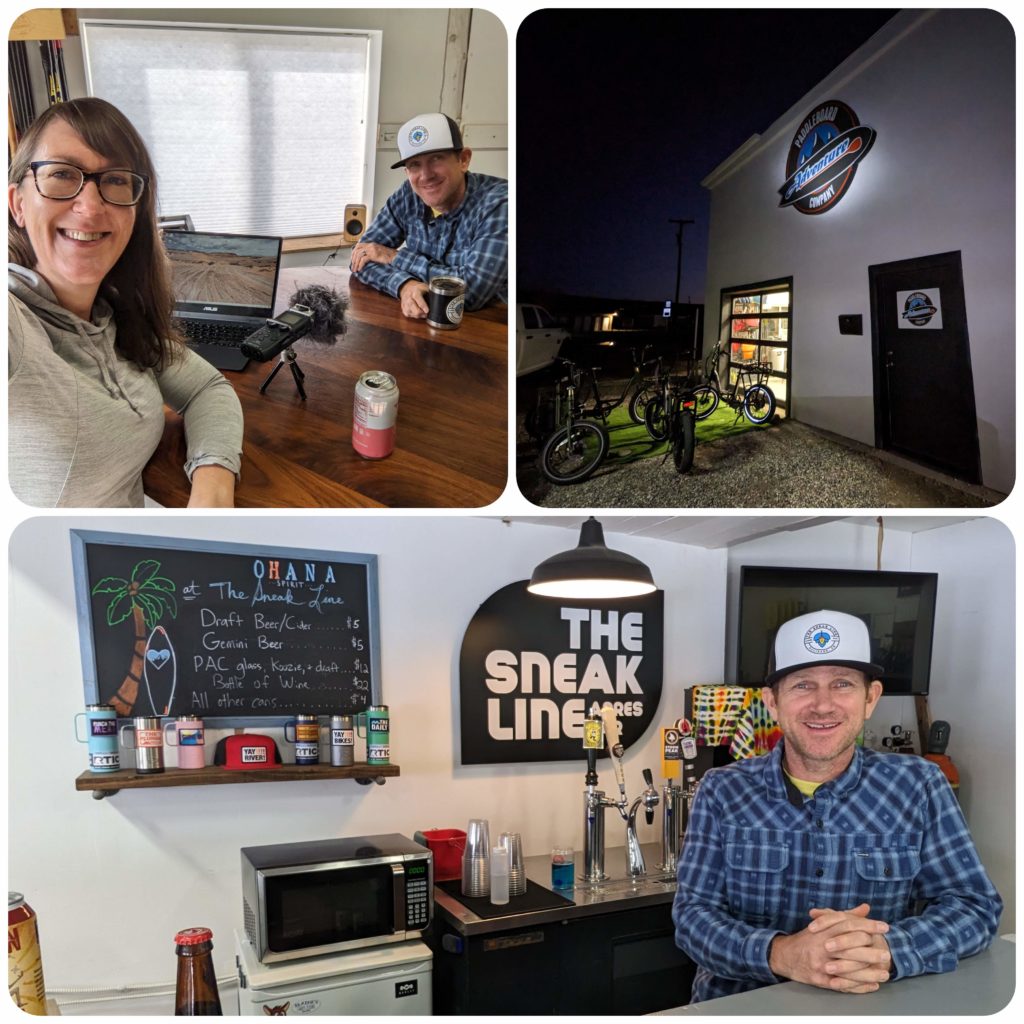
E2: Paddleboard Adventure Company – Danny Tebbenkamp

Featuring Danny Tebbenkamp, the owner of Paddleboard Adventure Company. Learn about the fun and unique events Danny and his team host – paddleboard yoga or a community float, anyone?, find out what airboarding is, and hear why Palisade is where Danny wants to be. Strap on your life jacket and remember the warmth of summer on this early spring day. Let’s float down the river with Paddleboard Adventure Company…

For more info about Paddleboard Adventure Company, including their upcoming events, find them on Facebook, Instagram, or their website.

Music by Romarecord1973 from Pixabay.

Subscribe:

SpotifyAnchorApple PodcastsCastBoxPocketCastsPandoraAmazon MusiciHeartRadioYouTube


Transcript:

Hello and welcome to Postcards from Palisade, the podcast that’s all about the people and places that make this slice of western Colorado wonderful. I’m your host, Lisa McNamara.

Today I’m talking to Danny Tebbenkamp, the owner of Paddleboard Adventure Company. Keep listening to learn about the fun and unique events Danny and his team host – paddleboard yoga or a community float, anyone?, find out what airboarding is, and hear why Palisade is where Danny wants to be. Strap on your life jacket and remember the warmth of summer on this early spring day. Let’s float down the river with Paddleboard Adventure Company…

Thanks so much for spending some time with me today.

Danny Tebbenkamp: Name’s Danny Tebbenkamp. Our business is Paddleboard Adventure Company. We do paddleboard rentals as well as ducky rentals and tube rentals for the river and lake. We also do lessons for those who want to learn how to paddleboard – whether flat water or if they want to get on the river and do river paddleboarding, we do that. And then we do tours as well – basically we just have – we call it the SUPSquatch, so we do tours on that, where people get onto one big board together and we just take them down the river. We do ebikes as well – ebike rentals and ebike wine tours, which have become quite popular.

Lisa McNamara: And where are you located?

DT: Well, we have a couple locations, but we started in Steamboat Springs – we have a shop there. Then we have a kiosk at Pearl Lake State Park, up near Steamboat, and then we have our Palisade location.

LM: How long have you been here in Palisade?

DT: This will be our third season, so 2021? Yes. I had to think about that. Is that right? Yes, that is right.

LM: And why did you decide to expand over to Palisade?

DT: Well, it’s kind of – not a long story, but the short of it is, we’d been in Steamboat for awhile, just kind of getting over the cold and the snow, and we had a buddy who honestly wanted to move from the front range for a number of reasons and we were looking to be around him more as well, and we had some friends here who were also in Palisade, and we were like, well, if he’s moving to Palisade and we want to get out of the snow, and we have other friends out here, and we have great access to rivers out here, we decided to just start looking into it and searching, we came across a house here.

So we bought a house here, because we wanted to be local – we eventually want to be local and live here, but, six months after we bought, our buddy reached out to us and said hey, we have a space that’s for rent – do you want to rent paddleboards out of it? And so that kind of began the story of, oh, well, if we’re going to live in Palisade, we might as well have a little business here too, and we’ll just expand our paddleboard company.

LM: What made you originally decide to open your own business, and specifically this business – gear rental, and tours, and things like that?

DT: Well, I’ve always been an entrepreneur. I have another company back in Steamboat – the company’s a great company but it’s not an exciting company. It didn’t really feed my adventurous spirit. So back in ‘09, I decided to branch out and do something that was more down the vein of what I wanted to do – which was, back in the day, back in ‘09, it was – we did wakeboard, wakesurf lessons, we did backcountry what was called airboarding trips, we did snowkiting, a bunch of crazy things. A couple of them took off, a couple of them met just limitations with permits, or insurance, or competition, so.

Back in ‘09, I was kind of toying with paddleboarding, because I had seen a guy doing it on a river and I was like, oh I want to do that. So I started in ‘09, just doing it on my own on the river and lakes and then in 2012, I just changed my company to Steamboat Paddleboard Adventures, because we were in Steamboat and we just did paddleboard adventures back in 2012. And I just started from there, just expanding out and growing my fleet. At that time it was the new and hot thing – well, actually, at that time, it was still kind of – people were like, what are you doing on a river with that thing?

LM: Right, because it was kind of a flat water thing, like lakes. And even that was kind of new.

DT: Yeah. It was a flat water or even an ocean thing.

LM Before we go forward – air – what was it, airboarding? And snowkiting?

DT: Yeah!

LM: What is airboarding? It sounds wild.

DT: It’s really fun. So we’d take people by snowmobile into the backcountry. They’re inflatable sleds that you ride face-first, kind of like a boogie board. And they have molded runners so you can actually carve through the powder and you can get some good speed. That was actually quite popular, I had a couple people come back every year to do it, and then eventually, insurance and permits were just a pain and not worth it. But it was fun for a couple years there doing it. But it’s a great way to enjoy the snow, or alternative way, if you don’t want to snowboard or ski.

LM: And so then I’m imagining that snowkiting is like kiteboarding but with a snowboard? That sounds wild.

DT: Yeah, like what they do in the ocean but doing it on the snow. Yeah.

LM: Oh! So this is like, a little bit tamer now!

DT: Yes, well, some of the whitewater I wouldn’t call tame, but yeah, around here, it’s – there’s not, unless you’re going out to Westwater and running those big class three rapids, it’s mostly tame around here, which is what most people want, and that’s what we want to offer.

LM: So, the other thing that I think is really interesting about what you do here is that you have a bar and shop. What made you decide to add on a bar?

DT: Well, it’s kind of been a dream of mine to have a bar, but I didn’t just want a bar. So I think it’s a great marriage of – we’re just an apres bar, meaning that we’re just a place you land after the day’s activity. Apres means after an event or after an activity. And so we think it’s just really cool to have a space that people come back from whatever adventure, whether they’ve rented from us or done an activity with us or they’re just biking by or hiking by, and they can sit down, belly up to the bar, and tell a story. And I feel like having a drink in hand is probably the best way to do it. It’s just a cool marriage of the two. I want to hear what they experienced if I didn’t take them out, I want to know, well, how was it out there, and have a beer while you’re telling me it.

Sorry, is that the – I can unplug that thing.

LM: Uhh…it is pretty loud.

DT: Want me to unplug it? I think it’s my cooler.

LM: OK!

DT: That’s just my kegerator. It should be fine. OK – do we need to go back and say all that again?

Anyway, it’s just a cool marriage of having a place for people to land after they’re paddleboarding or biking, whether they rent from us or do an activity with us, it doesn’t really matter. It’s just kind of cool to have a place after the day’s activity to land.

You know, it’s really big in the ski industry and so we just brought it to the paddleboard industry, where you come here and have a drink and tell us your story from the day, because I’ve always hated it when people would rent something and they would just come and drop their gear and leave, and I’m like, oh, I don’t even know – I’d try to talk with them but they wanted to get on and have a drink somewhere. And like well, shoot, now I can provide that.

LM: I think it’s the best-kept little secret bar in town too – it’s such a welcoming space and you’ve got board games laid out on the tables and really good pricing. What about the name, The Sneak Line? It’s probably just some term that I just don’t know.

DT: Well, it’s intentional to have it kind of unknown. It’s river slang – as you’re scouting a rapid to run it either via raft or paddleboard, you just have to see what’s the best way through, and sometimes it’s going through the meat of it – we call that punching the meat. And sometimes it’s called sneaking by – it’s the sneak line. There’s some times in big rapids might have a consequence if you hit that wave, you’re like oh, I need to get around that, you just take the sneak line around it to keep yourself safe or maybe to keep people on the raft that don’t want to get super wet, or get flipped. So yeah, it’s a cool little melding of the word. Uh…melding…that does not sound right. Anyway.

And then also someone had said, well it’s actually kind of cool – who knew nothing about it being a river thing – you’re kind of off the beaten path, so to get here you kind of have to take the sneak line to get – because people don’t know where we’re at.

LM: That’s good!

DT: Yeah, I like that too. I didn’t think about that when we made the name.

LM: What’s the biggest challenge of running your own business?

DT: Well currently, it’s just staffing. I think most people probably would agree with that. There’s a lot of places I could expand and do this model elsewhere, but I just don’t have the personnel. Palisade I do have a great manager and I have a couple returning staff year to year, so that’s helpful. But there’s still a couple holes to plug but, in Steamboat, once the summer hits, then I can barely get down here because I’m so busy in Steamboat, because up there, it’s hard to find people to work. More so than Palisade.

So that’s one of the biggest challenges. The other thing is being spread between three locations and trying to give my equal time to all of them and making sure the locals and my employees know that I care – that I’m not a distant owner who just doesn’t care. That could be a lot of time travel and a lot of extra longer days if I’m traveling from one place to the other. And then the books – just making sure you’re in the black most end of seasons and not in the red. I feel like, with Palisade, we’re still in our third year so this year should get us over the top and Steamboat and Pearl Lake have a little more history and momentum, so they do a little better, but it is what it is, part of the growing pains.

LM: Well what’s the best part about it?

DT: Oh man, I think just meeting people and getting those people out on the water to do something they’ve never done before, or just have an experience with family and friends. To know that we’re proving a service that people are getting to do things that they haven’t done.

This is kind of a cool industry. It’s about the people. And it’s really cool when you get good employees – I have a few in Steamboat and a couple here that come back year after year and those are fun connections.

LM: What I think is really cool about what y’all do is that it’s not just about gear rental – you have a lot of really fun events and even the rentals that you do are wild – like the SUPSquatch! I’m kind of obsessed with that. So can you describe what it is a little bit?

DT: Yeah so the SUPSquatch it’s just a big paddleboard. It’s about 15 feet in length and about 8 feet wide, I think. Don’t quote me on that, but we usually put six people on there with a guide. It could be less than six. If we’re not floating down the river, if we’re just sitting on a lake, I’ll cram as many people on there as they want to go and they can just have fun on it. We rent one on Pearl Lake and it’s a great little barge for a party barge for wedding parties or kids. It’s a great babysitter for parents. Like hey, I want to put all ten of my kids on this board and push them out on the lake and I can sit on the shore and not be annoyed.

You know, because if you’re all on your own paddleboard or your own ducky, you might be socializing a little bit as you’re floating down the river, but people can just kind of go off and do their own thing then in that situation. But on a SUPSquatch, you’re all stuck together.

This year I’m excited, we have two new…unfortunately the one we had last year is getting retired, it’s just so beat up. But we’re bringing in two new ones that – I don’t know if they’ll hold as many people, I think there will be four people with a guide, but you can get both of them and we can dock them together. But the SUPSquatch is just a unique – it gets everyone by surprise – what is that?

LM: And do you include a guide just because it’s so big to manage on the river?

DT: Yeah, just for protection of people on the SUPSquatch and also just for protection of the SUPSquatch. They’re not cheap, so we just like to have them managed by a guide.

LM: Makes sense. It makes it a cooler experience too because then people just get to float and it’s totally unique.

DT: Right.

LM: So that’s cool. And then something like SUP yoga just completely blows my mind. Like I’m not – I can’t do yoga on ground, and there’s a picture of someone on your website standing on their head on a paddleboard! How does that even work?

DT: Well the headstands, you know, that’s not for everyone, that’s really only the yogis. We never tell – we never have people do those things. Because that’s not where we’re trying to land. Yeah, I think it’s interesting, we get that question all the time, you can’t do it on land. Well, the worst case, on water, you’re going to fall in the water. But our instructors aren’t going to – it’s very basic yoga on the paddleboard, and it’s amazing, even just being on a paddleboard and doing some of the minor yoga moves, you get off the board and you just feel energized, your core is worked out, you’ll feel it the next day, and it’s just a fun way to get out of a sweaty studio, crowded studio, and get open air, fresh air. Like I said, worst case is you’re going to get wet, is what I tell people.

LM: And so are you going to be offering those classes again this year?

DT: We have three on the calendar right now – we call it Float and Flow. We’ll do yoga on flat water and then we’ll get on the river and just kind of float down.

LM: Very cool. Can you talk a little bit more about the guided wine tours on the ebikes? Do you have a set route with set wineries or do you just go where people want to go?

DT: We do have a – we’ll, we’re working on a set route and I think I can say, I can almost say that it’s official. We’ll know this weekend. So we have three – it’s four hours but we have three stops. Forgive me, I’m going to need your help on this, the first place we go is Miaison? (Varaison)…

LM: Oh, Maison (Varaison). You don’t want to ask me to pronounce things but I know what you mean. Maison (Varaison)!

Correction! Apparently, we’re beyond hopeless on pronunciation, because the winery that we’re talking about here is Varaison Vineyards. Thanks to sharp-eared listener Karen for pointing out the error. Now, back to the previously recorded podcast. Just remember…Varaison!

DT: Yes, OK. Yes, so, I’m sorry, if you’re listening to this, I can never say your name. But they’re really great people and why we stop there first is because they do the whole wine tasting experience. Maison (Varaison) is really cool with that, they give you the whole, how do you taste wine, how do you know if its – you know, just all those things. So that’s a really cool experience.

So then we go from there to Talbott’s, and Charles is really great, so they get their tasting, but then he gives the whole tour of the agricultural side, and how they do their ciders. So drink in hand, you get to see the whole behind the scenes that a lot of people don’t get to see.

And then, this one’s not official, but I’m pretty sure it’s going to happen. Clark’s – they’ve got the distillery right on the river, so it’s a cool place to land where people can get food, because by this point they could be hungry or want a snack. Which, I heard Talbott’s is actually doing food too, so there might be a couple options, but Clark’s is nice because now we have mixed drinks involved, so if people want to try a cocktail, they can have a cocktail there.

Clark’s also has a dock on shore off the river now, so then people can see the river and – hey, tomorrow, if you want to get on a paddleboard with us, we can float on by here, or you can float on by here and stop for a cocktail or you can just be with us and we can float this river that you can now see from Clark’s. That’s kind of our one-two-three punch. And then they’ll land back here at the Sneak Line and we always offer a drink here, if they want any more drinks, as part of the wine tour.

LM: That’s a really nice variety of things, and it’s a good distance too. What would you say it’s about, mileage-wise? Probably six to eight, maybe?

DT: Yeah, it’s actually a nice little route because you go toward…

LM: That’s not that bad!

DT: Because you go toward town and then you go up on the East Orchard Mesa, and then you get that nice loop around the river, so it’s actually a really cool, scenic one too, maybe six, eight miles.

LM: Yeah, and you’re on an ebike too, so if you want a little assist, you got it. Especially going up that hill!

DT: Yeah, going up 38, it can be a little – but yeah, we’ve tested, tried and true, our bikes make it up there, even with the steepness of the hill.

LM: What other events are you planning in Palisade here this season?

DT: We’ve got quite a variety of things. We’re going to go back to some of the standards from last year, which was the open mic – well, it’s not an open mic, I should say, it’s story night. So the mic is open and we have a theme and people come and tell a story based on the theme. We did that about three or four times last year, so we’ll do that again throughout the season.

We have our community floats, once a month, those are always popular. One of those will be the Pride float, which last year I think we had over 50 people, so this year we’re bracing for – I think we’ve already had people calling on that. That’s become quite popular, the Pride float, that’s in June.

LM: OK, and so can people rent – if they don’t have their own ducky or kayak, or something, can they rent here too for the community floats?

DT: Yeah. We’re typically rented out, so it’s like, get the gear early so you can have it, because if you don’t have it, we can rent it to you, as long as we have it in the inventory. So, the floats, the story time, we’ve got a couple historical nights. We did that last year – bring in the historical society and just open our bar and they can tell us the stories of Palisade or whatever theme we suggest or they suggest.

We have the yoga we’ve talked about already. We will do – we work with Harmony, the animal shelter. I think it’s Harmony, yep. And we do like a dog adoption, dog wash day. Which was fun. I think we saw like four dogs adopted last year, so that was a cool little event.

And we have a couple other fundraisers we’re still planning. We’ll do our Bike Palisade, which will be every third Thursday – not in April, but starting in May we’ll be doing that through the summer.

And let’s see – what am I missing? The best – I tell people to stay up to date you’ve just gotta follow us on Facebook or Instagram. That’s usually the best. Our website doesn’t keep up with that because there’s so much of it. That’s where you’re going to find what we’re doing.

And then this last year, and we’ll continue forward with this, we did a fall festival in October. We had some axe throwing, food trucks, it was really a cool time. And then we did an Artisan Market in December and then we did a ski and snowboard wax party in February. So even though we’re closed in the off season we try to do an event a month just to keep our name out there, so people know that we’re still here! We’re all in it together.

LM: Well it’s also really fun, unique things that you’re offering for the community that other people aren’t really doing. You seem to be finding the interesting little niches that other people aren’t working on right now.

DT: I think it just kind of goes back to – you know, we’re going to live here, we’re local. We live in Steamboat but we’re not trying to be those guys that aren’t connected to their community. We want to be connected and the best way to do it is through these events, and so that’s been cool.

LM: What are you most excited about for this upcoming season?

DT: Oh man, I think – I think we’re just hitting our stride, Palisade specifically, just because we, we’re in our third year, we’ve got good traction with everything we’re doing, we’re bringing on some new boards, some new events. We’ve got like, just, there’s a new buzz. Seems like people have been talking, sooner than in years past, OK, we’re ready, we’re excited.

The ebikes, I think we’re going to see some new traction with that too, because we’ve been doing that for our wine tours, we’ve heard from people that they like to do it that way, what we’ve been doing, just like a hand-held, guided, we got ya, here’s where we’re going to take you, you’re going to see some really cool things.

And then Pearl Lake, we just started a bar there last year, we have a lakeside bar. And I could work there every day. Just sitting on the shore, renting boards. I think there’s a lot of buzz going on right now for what we’re doing and I’m excited just to do what I need to do to help out where I need to help out – so I’m expecting a busy summer for myself.

LM: Yeah, I’m excited to get started! I want the summer to get here…

DT: Yeah, right? The river’s going to be amazing too, with all the snowpack that we’ve got building up. So we should have hopefully a nice, maintained river season. (squeak) Sorry – a nice, maintained river season! The sounds of the shop.

LM: You got it, you’re a professional. Alright, the last couple questions are more about Palisade. So – what’s your favorite thing about the community here in Palisade?

DT: Oh man…I think…well, it’s fun to like, go to certain place and see people you know from certain walks of life, around town and be able to just strike up a conversation. They say, as you’re shopping or out and about, don’t plan to – what you think might be a 20 minute stop to the grocery store is probably going to be like, 45 to an hour. Because you’re going to talk to people. So, that’s just a mindset that – back in Steamboat years ago, that’s kind of what it was, and I miss that. Steamboat’s just such a hustle bustle and busy – you see people, but everyone’s in such a rush now.

Here everyone’s still like in the slow pace, anywhere you go you’re going to run into somebody that you know or kinda know, but they’re so friendly that they’re going to talk to you – like hey, aren’t you that guy…or how do I know you? So I just love the community aspect of just the closeness, kind of we’re all in it together, you know? At these events we’ve done, I get a good handful of people that come every time, and it’s just, it’s a close knit. So that’s one of my favorite things.

LM: Same!

DT: And just the opportunity of the many activities that from here you can go into, you can springboard into, whether it be up on the mesa or on the river right here through town, or going out west. So I just think it really affords anyone who lives here to get outside and do an adventure. Those are probably my top two things I like about Palisade.

LM: I hear you – same! If and when you get a day off what’s your favorite thing to do with your time?

DT: Well, I’m kind of one of those guys that roll with the philosophy of work hard, play hard. I’m very good at putting – not to pat myself on the back, but – putting events on the calendar, even during the summer. Like, I’m a big river rat, obviously, but not always paddleboarding. We have our own raft and my family and I have done multiple river trips. So we have a couple already planned this summer. I’m like, well guys, I’m leaving. Don’t burn the ship, or don’t sink the ship, I’m going to be gone for a week on this trip to whatever river. And so, we just love that time with our family and friends to get on the river and just be rowing for a few days, going through whitewater, camping out under the stars.

If I only have an afternoon, well it depends on what the season is, like in springtime you’ll see me surfing the river wave in Steamboat every day, which someday I’m hoping we’ll have here. If I can be in the water, I’ll be in the water. Or near the water.

LM: They were going to do a river park here at one point, and it just seemed like too many challenges with the canal and the dam.

DT: Yeah, and there’s still going to be some challenges, I think there’s just – where they put it is kind of key. And the agricultural industry just needs to be – not convinced, but just be – what am I trying to say? We need to just let them know, we’re not taking your water. We’re just, as it’s going to your land, as it’s going to water your crops, we’re just gonna surf it as it’s passing through. We’re not taking it, it’s still going to get to your land, and where it needs to go.

It’s gotta move from A to B, so as it’s moving, I might as well surf it! You know, we need to just have certain things in place to make it surfable. And there’s so many mountain towns that have proven it to be an effective model and a very profitable model. BV/Salida probably the leaders in that. But you know, it hasn’t hurt anything down there.

I mean, get a surf wave in a canal, that’d be the easiest thing, it’s already constricted. But it’ll never happen, unless you get somebody who’s a big river surfer that owns a lot of land and agricultural and says – that’s what I do! Let’s make it happen in my canal! Anyway, I could talk all day, I’m super passionate about it.

LM: Who would you most like to hear from on a future episode?

DT: Oh, of your show? Your podcast?

LM: Yeah!

DT: Oh man…Rondo. Charles over at Talbott’s – or Bruce, maybe both those guys. Jeff and Jody – they’re doing a lot as far as this town and positive growth. And then I think Kaitey over at the Livery. She’s a really good friend of ours. She’s the bar manager over there and she’s also been super helpful for us. I think those are – a lot of people, but there you go. I’m curious what they would all say.

LM: That’s great! Well, thank you so much for your time, I really appreciate it.

DT: Yeah, thank you.

LM: You were actually one of the first people that I told, like the first few people I told about this idea last year. Even the first time I met you, you just have such a warm and welcoming attitude, and I’m sure that’s why people love to come back here, and it’s awesome.

DT: Well, that’s great. I wonder if my kids would agree on that sometimes. No, I think this is a great idea, good on you. I’m always for the entrepreneurial spirit, and I feel like I’ve had a few people help me out along the way – well, not a few, a lot, so I’m just kind of paying it forward as I go forward, looking for those opportunities and helping out where I can.

LM: Well, I really appreciate it, and cheers to the first podcast guest!

DT: Woohoo! I can’t wait to hear it!

LM: Thanks!

DT: Thank you!

LM: If you’re looking for something different to do this summer, Paddleboard Adventure Company is a good place to start your search. You can keep up with the latest by following their socials.

DT: Facebook is just Paddleboard Adventure Company-Western Slope. I think that’s the same for Instagram. And also if you go to our webpage, paddleboardadventurecompany.com, the links to those are there.

LM: Danny and his team are working hard to build their piece of the community here in Palisade. They’re a great reminder that community is what you make it.

The Postcards from Palisade podcast is available on all major podcast distribution platforms like Spotify, Apple Podcasts, and Stitcher. Find us and subscribe now so you never miss an episode. We also have a website, postcardsfrompalisade.com, where latest episodes and links to more information are posted.

If you are interested in being on the show or if you have ideas for a future show, I’d love to hear from you. You can reach me at lisa(at)postcardsfrompalisade.com.

Thanks for listening. With love, from Palisade.

E1: Greetings from Palisade!

For our very first episode, we’re sending you a special greeting from Palisade. Learn a little more about the town of Palisade, your host, Lisa McNamara, and what you can expect from future episodes. 

Music by Romarecord1973 from Pixabay.

Subscribe:

SpotifyAnchorApple PodcastsCastBoxPocketCastsPandoraAmazon MusiciHeartRadioYouTube

Transcript:

Hello and welcome to Postcards from Palisade, the podcast that’s all about the people and places that make this slice of western Colorado wonderful. I’m your host, Lisa McNamara.

Have you ever wondered what its like to run a winery or a hotel in one of America’s most beautiful small towns? Or do you want to get to know your neighbors better? We’re here to give you a snapshot of the people, businesses, and history of the Palisade area with stories for locals and visitors alike.

Today, in our first episode, we’re sending you a very special greeting from Palisade! Keep listening to learn a little more about the town, your host (me!), and my plans for this podcast.

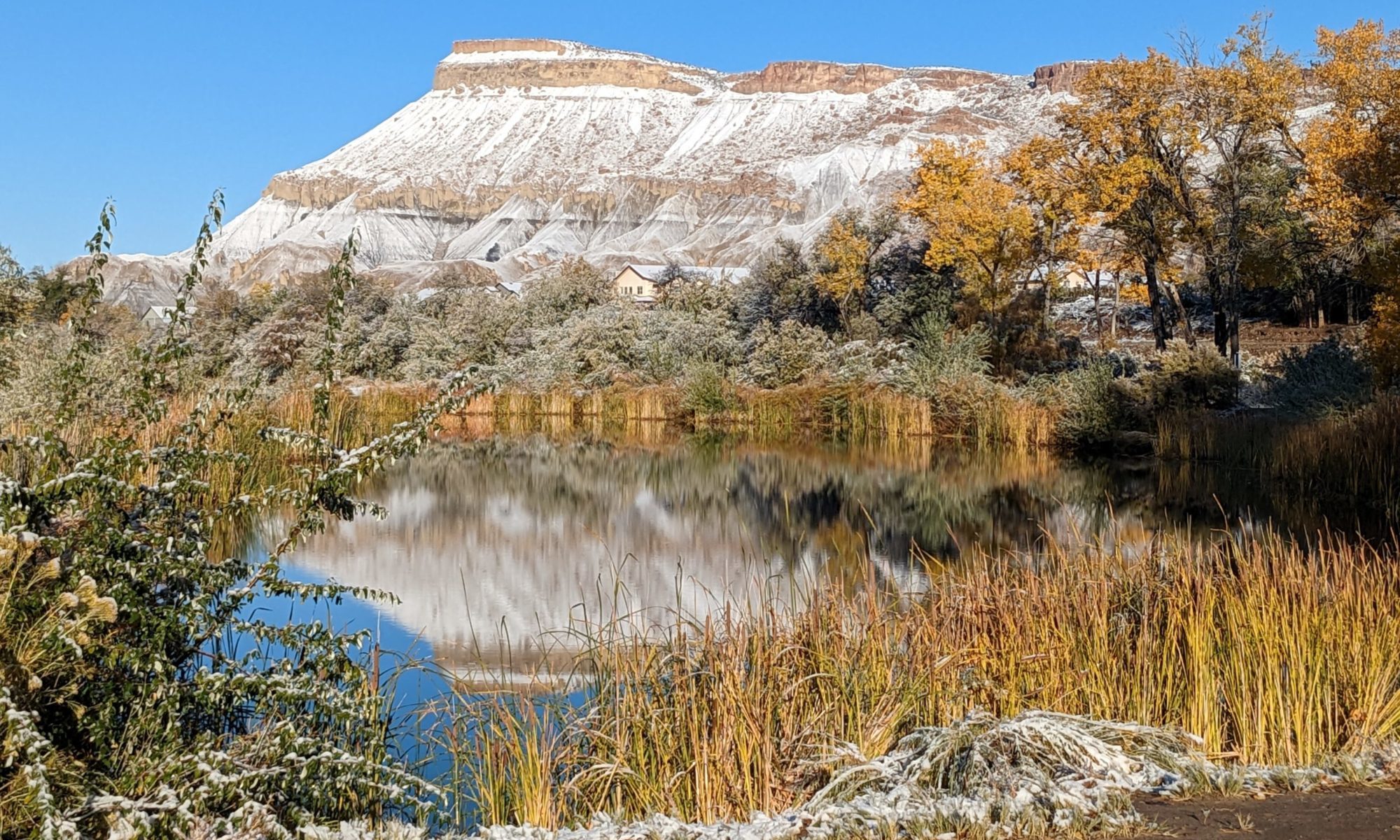
Palisade sits in the easternmost portion of the Grand Valley where the Colorado River exits the Rocky Mountains and starts its journey through the canyonlands of the Colorado Plateau.

The Uncompahgre band of the Ute people first lived in this area before they were forced to relocate. The first settlers arrived in the Palisade area in the late 1800s and quickly realized they could use water from the Colorado River, which borders the southern end of the town, to grow peaches, grapevines, and other crops. After coal was found in the cliffs to the north of town, coal mining, in addition to the orchards and the vineyards, sustained the town in its early days.

Palisade was named for the tall cliffs, aka “palisades,” that line the northern edge of town. These cliffs help create a unique microclimate, along with other surrounding features like Grand Mesa, that makes this area a touch warmer than its neighbors. It’s high desert country with lots of sun, warm days, and cool nights.

Now home to over 2,500 residents, Palisade is still known for its peaches and wine, though coal mining has gone the way of the dinosaurs. The town is home to over 500,000 peach trees and 1,000 acres of vineyards, which produce about 90% of the grapes used in Colorado wines made both here and around the state. Palisade is part of the Grand Valley American Viticultural Area (AVA) created in 1991. The town’s population swells on festival weekends during the summer as visitors and locals alike gather to listen to live music, eat peaches, celebrate honeybees or lavender, and drink wine.
https://visitpalisade.com/the-history-of-palisade-our-story/

So that’s our little town. But who am I, and why am I doing this podcast?

My path to Palisade was as winding as an old, untrained grapevine. (I have great similes.) Having growing up in a small town in upstate NY, I was eager to get away from country life and explore the US and world. After graduating, my now-husband, Paul, and I moved to Chicago and spent the next eight years taking in everything that the big city had to offer: shows by all my favorite performers, food and drink I’d only read about, an inspiring art scene, people from all over the world, and easy access to faraway destinations via major airports. But I missed nature and biking and the outdoors, and that was all harder to find in Chicago.

So back before Instagram was big and vanlife was a hashtag, Paul and I quit our jobs, sold or donated most of our stuff, and traveled around the United States for a year in a minivan. After a wonderful, but savings-depleting year, we went back to work and over the next decade lived in upstate NY, Wisconsin, Chicago again, and Fort Collins, where, during the pandemic, we got itchy feet once again. So we bought a pickup truck and a small camper that fit in the bed of the truck, quit our jobs, sold or donated most of our stuff, and lived on the road again full time for fifteen months.

That’s when I got a taste for making podcasts. I created a podcast called Road Tripping in America while we lived on the road full-time. But the travel podcast world never quite seemed like the right fit for me. We were often out in the backcountry somewhere, visiting places that I didn’t really want to tell lots of other people about and not seeing many other people to talk to. And full-time road life also didn’t feel like a great long-term fit. We missed having a community, having local friends we could invite over for dinner, seeing familiar faces in the post office and at the grocery store. We were tired of looking for a new place to sleep every night. We had been moving so much and for so long: fourteen moves and over two years on the road in the past twenty years. We were exhausted!

We knew we wanted to stay in Colorado, so we sat down and made a list of our criteria for the perfect location. Walkability. Affordability. Culture. Friendly people. Easy access to nature but also to an airport. Then we looked at all the options. And right at the top of our list was the little town of…Montrose, CO.

That’s not Palisade! Nope. It was not Palisade. We were all in on Montrose, but after a few months of trying and failing to find a house there, with the winter weather closing in, we decided to rent a place in a nearby town to catch our breath. And the best place available for rent at that time just happened to be in Palisade.

We had visited Palisade before and loved it, but worried that the town was too small and for Paul, too hot in the summer. Still, facing the alternative of another winter on the road, we decided those fears did not outweigh the known difficulties of wintertime vanlife. So we moved into the rental and collected our remaining house stuff from storage.

In Palisade, we biked through the vineyards and had a happy hour glass of wine at places we’d only ever visited on vacation. We shopped for local produce from the farmer’s market and marveled at the delicious Palisade peaches, plums, melons, and Olathe sweet corn. We gazed out our windows at the kinds of views we’d have had to drive miles down a backcountry road to enjoy. And, most importantly, we were embraced by the warm and friendly community. We had accidentally found exactly what we were looking for. I didn’t want to start over again somewhere else.

Over twenty years, every step we took brought us closer to the right place for us. And despite all our research and analysis and pro/con lists, we ended up just stumbling onto it in the end. And now we’re staying put.

So hi, that’s me, but we are not going to be talking about me on the regular episodes. What I quickly realized is that there is an abundance of amazing people here in Palisade, with so many stories to share.

There are the owners and staff of the more than 30 wineries and tasting rooms, brewery, cidery, and distilleries.

The workers who tend the vines, orchards, and fields, pruning in the winter, harvesting in the summer and fall, and everything else in between.

The farmers growing peaches and other fruits, veggies, lavender, and lots of other crops. The people at the insectary who help them all out. What’s an insectary? Am I even pronouncing that right? Let’s find out together!

There are the restaurant and food truck owners who add their own flavor to the town.

The festival operators who plan legendary events.

The farmers market organizers who make downtown Palisade the tastiest place to spend summer Sundays.

The shop owners who are ready to rent you a bike, a kayak, or a paddleboard, or source you a cute hat or unique piece of art.

The local pedicab operators who offer a unique form of transportation and tours.

The hotel and B&B owners where visitors can rest after a fun day or locals can outsource their guest rooms.

The locals, who can share what’s it like to live here – from fun things like community bike rides to important services like child and migrant support to the same housing availability and affordability struggles and the kinds of cultural changes that most small Colorado towns are currently facing.

And there’s so much more. But you get the point. There’s a lot going on in this little town.

Right, right, OK, first I have to meet these people, then I have to convince them to talk to me on tape. Come along as we see how that goes! As a newer Palisade resident, I bring no assumptions or judgments to the table. And I’m not taking sponsorship or funding from guests, so you can listen knowing that you’re hearing a perspective that’s unbiased. I only want to learn all there is to know about this town and share the cool stuff with you all.

The Postcards from Palisade podcast will be available on all the major podcast distribution platforms. Find us and subscribe now so you never miss an episode. We also have a website, postcardsfrompalisade.com, where latest episodes and links to more information are hosted.

If you are interested in being on the show or if you have ideas for a future show, I’d love to hear from you. You can reach me at lisa(at)postcardsfrompalisade.com.

Thanks for listening. With love, from Palisade.